
Wholesale DIDs: The Complete Guide

September 2, 2026
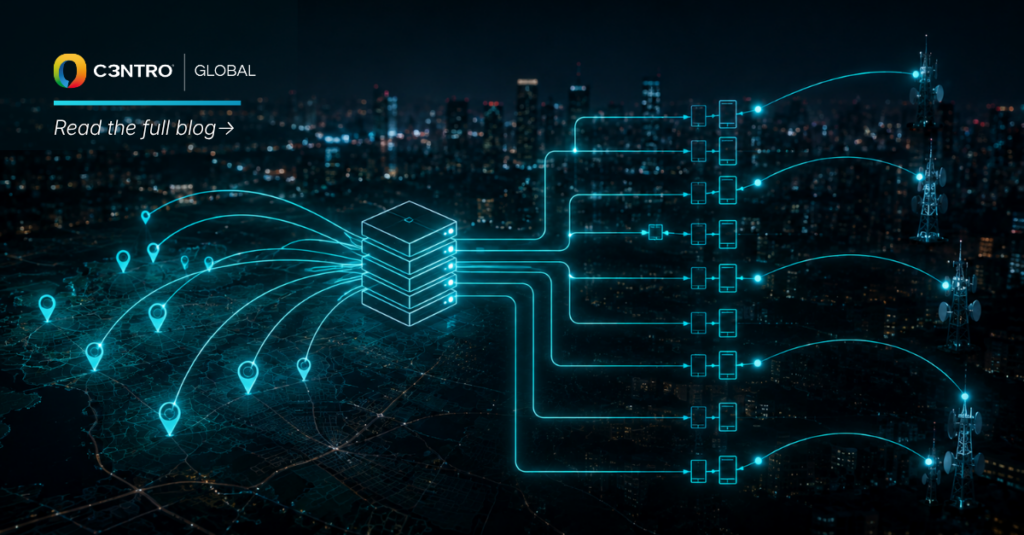
A wholesale DID number is a phone number sourced directly from a carrier’s numbering allocation and made available to businesses, CPaaS platforms, and resellers through a single provisioning relationship, instead of through individual local carrier contracts in every country. Buying DIDs at wholesale means accessing that inventory at scale: local, national, toll-free, and two-way numbers across dozens or hundreds of markets, provisioned through one API or portal. This guide covers what a DID number is, the types available, how provisioning and porting actually work, and what to check before committing to a bulk DID purchase.
What Is a DID Number?
A DID (Direct Inward Dialing) number is a telephone number that routes an inbound call or message directly to a configured destination over SIP, without requiring a dedicated physical line. It replaces the old model where every incoming line needed its own copper connection.
That definition covers the concept. The mechanics of how a call actually travels from the public network to a destination, and how DID numbers fit inside a cloud PBX, contact center, or voice API application, are covered in full in How Do DIDs Work? and How do Businesses Use DID Numbers?. This guide focuses on what happens before that: choosing, provisioning, and porting the numbers themselves at volume.
What Types of Wholesale DID Numbers Are Available?
Not every DID number serves the same purpose. Before buying in bulk, it helps to know which type actually fits the use case, since mixing them up is one of the most common and expensive provisioning mistakes.
Local (Geographic) DID Numbers
Carry an area code or city code tied to a specific market. They signal local presence to the person receiving the call, which measurably improves answer rates for outbound and inbound customer contact. Geographic numbers typically require carrier-grade routing and, in some markets, documentation proving local business presence.
National DID Numbers
Not tied to a specific city or region, but still reachable at local call rates within a country. Useful when a business wants one number covering an entire country without committing to a single city’s identity.
Toll-Free Numbers
Free for the caller to dial, with the receiving business absorbing the cost. Common for customer support lines and centralized service numbers, with coverage that generally spans the Americas, Europe, and Asia-Pacific depending on the provider’s footprint.
Two-Way DIDs (Voice and SMS)
Handle both voice calls and SMS messages on the same number. This is the format most CPaaS platforms and omnichannel OTT applications request, since it lets a single number cover verification codes, conversational messaging, and voice in one provisioning event instead of two.
| Type | Best For | Coverage Note |
|---|---|---|
| Local (Geographic) | Regional customer presence, local answer rates | May require local documentation in some markets |
| National | Single number for country-wide reach | Not tied to a specific city or area code |
| Toll-Free | Centralized customer support lines | Availability varies by region and provider |
| Two-Way (Voice + SMS) | CPaaS and omnichannel OTT platforms | Single number handles both channels |
How Does the Wholesale DID Supply Chain Work?
Every DID number traces back to a national numbering authority that allocated it to a licensed carrier. Wholesale providers build relationships with those carriers so a buyer can access numbers in dozens of countries through one commercial and technical relationship instead of negotiating with each local carrier directly. How directly a provider sources from that original allocation, commonly described as Tier 1 versus Tier 2 sourcing, affects compliance documentation, inventory stability, and how reliably a number ports later. The full breakdown of that supply chain, including how to evaluate a provider’s sourcing tier before committing, is covered in How the Wholesale DID Market Works.
How Does DID Number Provisioning Work?
Provisioning is the process of activating a new DID number and pointing it at a destination, whether that is a SIP trunk, a cloud PBX extension, or a voice API endpoint. At wholesale volume, this happens one of two ways.
Manual provisioning through a web portal works for occasional, low-volume number requests: searching available inventory by country and number type, then assigning it to a destination through a dashboard. It does not scale past a handful of numbers a month.
API-based provisioning is the standard for bulk purchases. A provisioning API allows programmatic search of available numbers by country, area code, and type, instant assignment and routing configuration, and real-time inventory status without manual queries. For a CPaaS platform onboarding thousands of end users, or a contact center expanding into a new market, this is not a convenience feature, it is the only workable method. The quality of that API, including uptime, response time, and error handling, is as important as the depth of the underlying number inventory.
How Does DID Number Porting Work?
Porting moves an existing number from one carrier to another without changing the number itself. This is the part of buying DIDs in volume that trips up the most buyers, because the process has more moving parts than most people expect, and it gets considerably more complex once dozens or hundreds of numbers are involved at once.
The Step-by-Step Porting Process
A port always involves two parties: the losing carrier, who currently holds the number, and the gaining carrier, the new provider taking it over.
LOA Signed
The subscriber signs a Letter of Authorization confirming ownership and authorizing the transfer.
Port Request
The gaining carrier validates the details against the losing carrier's account records.
FOC Issued
The losing carrier returns a Firm Order Commitment with a scheduled cut-over date and time.
Cut-Over
The number's routing updates to the gaining carrier. Calls now reach the new network.
According to TelcoBridges’ technical guide on number porting, the LOA collection step is where expectations about what does and does not transfer should be set, since features like voicemail and per-number customizations are platform specific and do not carry over automatically. Any mismatch in business name, address, or account number is the single most common cause of port delays.
Why Bulk Porting Is Different
Porting one number is straightforward. Porting a thousand-number trunk is not the same task repeated a thousand times, it is a coordination problem. As TelcoBridges explains, when a subscriber has a trunk with many DIDs, each number is technically ported through its own individual request, and attempting to treat a large batch as a single record can lead to partial completions, where some numbers land on the new carrier while others stay behind, breaking inbound routing for part of the trunk. This is exactly why wholesale providers use block-port mechanisms and coordinated batching for large inventories, rather than submitting bulk numbers as one port and hoping nothing falls through.
Before moving a large number inventory, confirm with the provider how they batch bulk ports, what the expected timeline is per market, and what the fallback plan is if a subset of numbers fails to complete on the scheduled cut-over window.
What Should You Check Before Buying DID Numbers in Volume?
Coverage and provider sourcing tier matter, and that ground is already covered in How the Wholesale DID Market Works. Two things that get less attention, and that can quietly undermine a bulk DID purchase, are number reputation and porting terms.
Caller ID Reputation and Attestation
newly acquired DID number is not guaranteed to be clean. Numbers previously assigned to other customers can carry a flagged reputation with carrier analytics engines, even if they were never used for anything improper. In the US market specifically, every legitimate voice service provider is required to certify its call authentication status in the FCC’s Robocall Mitigation Database. As IDT Express notes in its 2026 compliance guide, providers not listed in the Robocall Mitigation Database with an active, current filing must have their traffic blocked by terminating carriers.
Portability Terms
Not every number can be ported freely, and terms vary by provider and by country. Confirm in writing whether numbers can be ported out if the relationship ends, what fees apply, and what the typical timeline is per market, before signing a volume commitment rather than after.
Activation Speed and Contract Minimums
For CPaaS and contact center use cases, activation speed at scale matters more than activation speed for a single number. Ask specifically how the provider handles bulk activation requests, whether that happens through the same API used for individual provisioning, and whether there are minimum volume commitments or tiered pricing thresholds that change the economics of buying at different scales.
Caller ID Reputation
Confirm the provider's attestation level and Robocall Mitigation Database status before buying for outbound use.
Portability Terms
Get porting-out fees and timelines in writing before signing a volume commitment, not after.
Activation Speed
Confirm bulk activation runs through the same API as single-number provisioning, plus any volume minimums.
How Does PSTN Replacement Fit Into a Bulk DID Purchase?
A large share of bulk DID purchases today are not new deployments, they are migrations away from legacy copper and ISDN lines as national carriers retire PSTN infrastructure on defined timelines. In that scenario, the DID numbers being purchased are not new numbers, they are the existing business numbers being ported onto SIP-based infrastructure to preserve continuity while the underlying network changes. The regulatory timelines, market-by-market switch-off dates, and what to plan for in a PSTN migration specifically are covered in What Is PSTN Replacement?
How Is C3ntro Global Positioned as a Wholesale DID Provider?
C3ntro Global provides wholesale DID coverage across 120+ countries, with local, national, toll-free, and two-way number formats available depending on the market, provisioned through API or web portal. PSTN Replacement is an active part of that offering, not a side service, supporting organizations migrating existing numbers off legacy infrastructure. With more than 30 years of experience in the sector, we work selectively with the carriers and clients it partners with, treating reputation in the wholesale market as something to protect rather than trade away for volume. The goal for a buyer working with C3ntro Global is straightforward: one carrier relationship covering the number inventory, provisioning, porting coordination, and compliance documentation a bulk DID purchase requires, rather than a separate relationship per market. C3ntro Global as The DID Experts. Full service details are available on the Wholesale DIDs page.
Frequently Asked Questions
How long does it take to port a large batch of DID numbers?
Timelines vary by country and by how many intermediary carriers are involved in the original number’s ownership chain, but a Firm Order Commitment date is typically set within days to a few weeks of a validated port request. Bulk batches take longer than single ports because numbers are usually grouped and scheduled in coordinated waves rather than moved all at once, to avoid partial completions.
What is an LOA and why does every port need one?
A Letter of Authorization is the signed document proving the requesting party owns the number and authorizes its transfer to a new carrier. Without it, the losing carrier has no way to confirm the port request is legitimate, and it is the single most common point where bulk ports get delayed due to mismatched account details.
Can toll-free and geographic DIDs be ported through the same process?
The underlying LOA and FOC process is similar, but toll-free numbers and geographic numbers often sit in different registries depending on the country, which can mean different timelines and different documentation requirements within the same bulk order. Confirm both categories separately when planning a mixed-inventory port.
What happens if a DID number has a bad CLI reputation before you buy it?
A number with a poor caller ID reputation can get labeled as spam or scam risk by carrier analytics engines regardless of how it is used going forward, which lowers answer rates from day one. This is why checking a provider’s number vetting and attestation practices matters before committing to volume, not after deployment.
What is the difference between provisioning a new DID and porting an existing one?
Provisioning assigns a brand new number from the provider’s available inventory. Porting transfers a number a business already owns from its current carrier to a new one. Bulk purchases often involve both at once: new numbers provisioned for expansion into markets where the business has no existing footprint, and existing numbers ported over where continuity with established contacts matters.
RECENT ARTICLES
- C3ntro Global at WWC 2026 October 23, 2026
- PSTN Replacement and Copper Switch-Off September 28, 2026
- Wholesale DIDs: The Complete Guide September 2, 2026
- What Is PSTN Replacement? August 26, 2026
- VoIP vs Voice Termination: Key Differences August 14, 2026
CATEGORIES
INSIGHTS
From the Network







©2026 C3NTRO Telecom All Rights Reserved