
7 Benefits of DID Numbers for Business

July 13, 2026
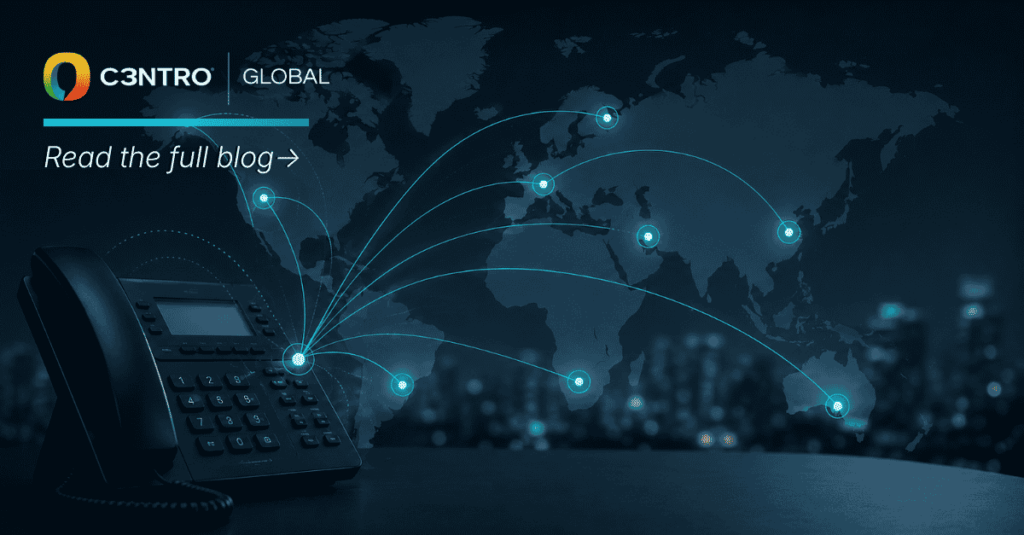
Direct Inward Dialing (DID) allows a company to hold local phone numbers in any city or country in the world, routed directly to its communication infrastructure, without dedicated physical lines or offices in each market. According to DIDlogic’s analysis of the global virtual numbers market, the DID market is projected to reach $47.5 billion by 2032, growing at a CAGR of 16.3%, reflecting a structural shift away from hardware PBX systems toward cloud-managed virtual numbers. If your business operates across multiple markets, serves remote customers, or runs distributed teams, DID numbers are the infrastructure layer that makes that communication possible without the constraints of legacy telephony.
What Is DID Telephony and How Does It Work?
A DID number routes calls directly to a configured endpoint, whether that is a PBX, a contact center platform, a SIP client, or a cloud application, without requiring a physical line per number. The caller dials a local number and the call arrives at its destination through a SIP trunk. From the caller’s perspective it is an ordinary phone call. What changes completely is the infrastructure behind it.
Instead of installing hardware in every city where your business needs a presence, you configure a routing instruction in software. That instruction can point anywhere in the world, be updated in real time, and scale to hundreds or thousands of numbers without touching any physical equipment. The full technical explanation of how DID routing works is available in How Do DIDs Work?
7 Benefits of Using DID Numbers in Your Business
1. Local Presence in Any Market Without Physical Infrastructure
With geographic DID numbers, your business can hold numbers with area codes from Mexico City, Monterrey, São Paulo, Bogotá, or Madrid, all active simultaneously, all routed to the same support team. Customers in each city see a local number and call without international charges. Your company needs no offices, no local employees, and no carrier contracts in each country.
2. Significant Reduction in Operating Costs
A traditional phone line charges per physical channel, per installation, per maintenance contract, and per market where presence is required. DID numbers run over SIP trunks: hundreds of numbers share a pool of concurrent channels sized to actual call volume, not to the total number of DIDs in inventory. Cost does not scale linearly with the number count. It scales with real usage.
For companies expanding internationally, the difference between installing physical lines in each country and provisioning DIDs through an API is the difference between months of implementation time and minutes.
3. Direct Integration with PBX, IP PBX, and Contact Center Platforms
C3ntro Global DID numbers integrate with any communication infrastructure that supports SIP: physical PBX, IP PBX, UCaaS platforms like Microsoft Teams or Zoom Phone, and any cloud contact center. No proprietary adapters or platform changes are required.
Integration with Microsoft Teams through Direct Routing is one of the most common deployments: every Teams user needs a DID assigned to receive external calls. With C3ntro Global, that DID is provisioned in minutes via API and activated in the Teams tenant without additional steps.
4. Self-Managed Platform With Full Operational Control
C3ntro Global’s platform allows your IT or telecom team to activate, redirect, suspend, and audit DID numbers without depending on a support ticket or a provider’s response time. Real-time control over the entire number inventory sits directly with your team.
- Number search by country, area code, and type (geographic, non-geographic)
- Assignment and routing configuration without manual provider intervention
- Live status visibility across all active numbers in inventory
- Change history and per-number audit trail
5. Unlimited Scalability Without Infrastructure Investment
Entering a new market, onboarding a new team, or launching a new campaign requires no hardware installation. You provision the number, configure routing, and it is live. If the market does not work out or the campaign ends, the number is deactivated without infrastructure penalties or long-term carrier contracts.
This flexibility is especially valuable for businesses with seasonal operations, startups testing new markets before committing to physical presence, and contact centers that need to scale capacity rapidly during demand peaks.
6. Support for Remote Teams and Distributed Work
Remote work in Latin America grew from 3% of the workforce in 2019 to 30% by 2023, with 81% of Latin American companies operating under hybrid or fully remote policies, according to Forbes Business Council and Nearshore Americas data. In that context, every remote team member needs a company number that does not depend on their personal phone or a physical office.
With a DID routed to their SIP client or softphone, the team member receives and makes calls under the company’s identity, from any city, with the same quality as if they were in a physical location. Routing is managed centrally and can be updated without touching the user’s device.
7. Compliance With Local and International Regulations
Every country has its own regulatory framework for telephone number assignment and use. In some markets, geographic numbers require documentation of local presence. In others, such as the United States under the 10DLC framework for SMS, campaign registration is required before traffic flows reliably. C3ntro Global maintains active compliance infrastructure in every market in its portfolio, including KYC (Know Your Customer) management per number and porting support by country.
For companies in regulated industries such as financial services, healthcare, or professional services, compliance with these frameworks is not optional. A DID provider without per-market compliance infrastructure is an operational risk, not just a connectivity vendor. More on number allocation, porting, and KYC requirements is in How the Wholesale DID Market Works.
DID Numbers vs. Traditional Phone Lines
The difference between the two models is not only technical. It is operational and financial.
| Feature | Traditional Phone Line | DID with C3ntro Global |
|---|---|---|
| Infrastructure required | Physical hardware per location | None, fully software-defined |
| Implementation time | Days or weeks per installation | Minutes via API or platform |
| International coverage | Limited, one contract per country | 120+ countries from a single platform |
| Scalability | Limited by available hardware | Unlimited, added in software |
| Cost at scale | Grows linearly with each line | Based on actual concurrent channels |
| Administration | Manual, requires a technician | Self-managed from web platform |
| Remote support | Constrained by physical location | Any SIP endpoint in the world |
| Regulatory compliance | Managed by local carrier only | Per-market KYC infrastructure included |
When Should a Business Use DID Numbers?
DID numbers are the right solution when a business needs one or more of the following capabilities.
Discover more about our DID solutions and how they can empower your company.
Frequently Asked Questions
What is a DID number and how is it different from a virtual number?
A DID (Direct Inward Dialing) number is a phone number routed directly to a voice endpoint configured in software, without a dedicated physical line. The term virtual number is broader and describes any number not tied to a physical line. Every DID is technically a virtual number, but not every virtual number carries the routing capabilities, SIP integration, and regulatory compliance infrastructure that characterize a wholesale-grade DID. The practical difference lies in the depth of the infrastructure behind the number.
How many DID numbers can a business manage from a single platform?
There is no fixed technical limit. A business can hold hundreds or thousands of active DID numbers across multiple countries from a single wholesale relationship with C3ntro Global. The practical constraint is the concurrent channel capacity of the SIP trunk, which is sized according to expected peak simultaneous call volume, not the total DID count in inventory. In most enterprise deployments, channel capacity is a fraction of the total active number inventory.
Can a DID number receive SMS as well as calls?
Yes, in many cases. A messaging-enabled DID functions as a dual-channel number: it receives calls and sends or receives SMS from the same identifier. Availability depends on the carrier holding the number allocation, the country where it is registered, and the provider’s platform configuration. Not all geographic number formats support SMS. The full explanation of how SMS-enabled DIDs work is in What Is a DID Message?
What happens if I need to port an existing DID number to C3ntro Global?
Number porting is available in most markets. The process transfers the number from your current provider to C3ntro Global without changing the number itself. Complexity depends on the country where the number is registered, whether it is geographic or non-geographic, and the sourcing tier of the original provider. Numbers sourced directly from Tier 1 carriers port more predictably than those passing through multiple intermediaries. C3ntro Global manages the porting process per country as part of the onboarding. More on Tier 1 versus Tier 2 sourcing and its impact on porting is in How the Wholesale DID Market Works.
Do C3ntro Global DID numbers work with Microsoft Teams?
Yes. Microsoft Teams requires Direct Routing to connect to the public telephone network. That connection is established through a certified SBC (Session Border Controller) and a SIP trunking provider with DID inventory in the countries where the business operates. C3ntro Global provides both: SIP trunking with carrier-grade connectivity and DID numbers in 80+ countries. Each Teams user assigned a DID can receive and make external calls directly from the Microsoft 365 environment without leaving the platform.
RECENT ARTICLES
- PSTN Replacement and Copper Switch-Off September 28, 2026
- Wholesale DIDs: The Complete Guide September 2, 2026
- What Is PSTN Replacement? August 26, 2026
- VoIP vs Voice Termination: Key Differences August 14, 2026
- SMS Delivery Monitoring and Control August 12, 2026
CATEGORIES
INSIGHTS
From the Network










©2026 C3NTRO Telecom All Rights Reserved