Latin America is in the middle of a structural digital shift. The region’s digital transformation market reached $102 billion in 2025 and is projected to grow at a CAGR of 15.17% through 2034, reaching $364 billion. At the infrastructure layer of that shift, Direct Inward Dialing (DID) services are the mechanism that allows companies to operate with local voice presence in any market, without building physical infrastructure in each country.
The numbers have moved significantly in the past two years. According to GSMA’s Mobile Economy Latin America 2026 report, mobile technologies and services generated $600 billion for the Latin American economy in 2025, equivalent to 8.6% of regional GDP, with that figure projected to reach $700 billion by 2030 as 5G, AI, and cloud adoption accelerate. J.P. Morgan’s digital infrastructure analysis of the region found that internet adoption has surged from 43% in 2012 to nearly 78% today, and the number of people with mobile internet access grew from 220 million to over 450 million between 2014 and 2025.
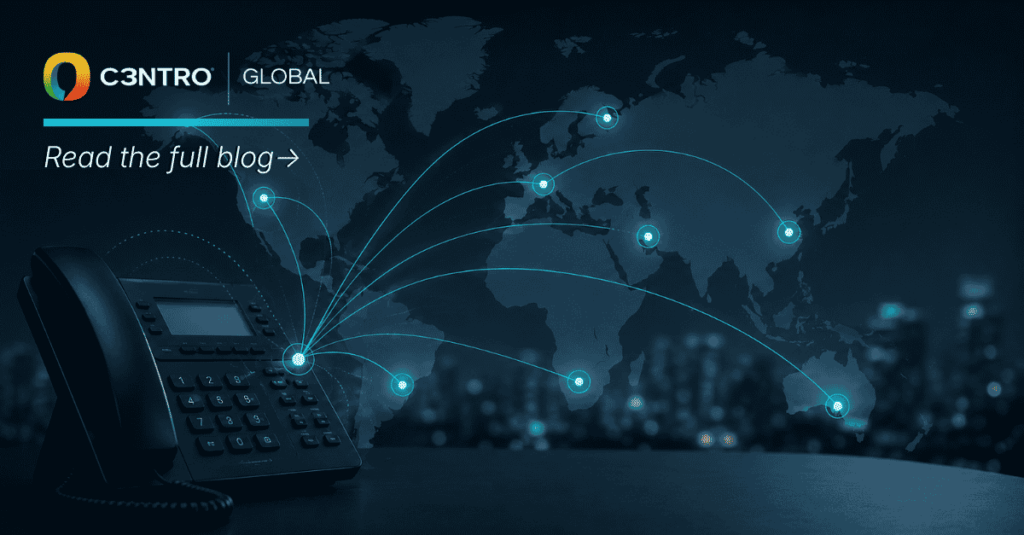
A DID number routes calls directly to any configured SIP endpoint, whether that is a PBX, a cloud contact center, a UCaaS platform, or a developer API, without requiring a dedicated physical circuit or a local office in each country. For companies expanding across LATAM markets, this is the most practical mechanism for establishing a local calling identity in each territory. A full technical breakdown of how DID routing works is available in How Do DIDs Work?
Remote work in Latin America went from a minority practice to a structural reality in a short period. As Forbes Business Council reports, citing Nearshore Americas data, the share of LATAM workers operating remotely rose from roughly 3% in 2019 to 30% by 2023, and 81% of Latin American companies had adopted hybrid or fully remote policies by that year. Unlike the US, which has seen a rise in return-to-office mandates in 2025, LATAM’s remote work adoption has continued to consolidate.
Distributed teams create a specific communication infrastructure problem: voice connectivity designed for a physical office does not extend cleanly to employees working from different cities or countries. DID services solve this by decoupling the phone number from the physical location.
For a full breakdown how do businesses use DIDs, see DID Numbers for Enterprise: What are DID numbers and How to Deploy Them
LATAM companies expanding internationally face a specific barrier: establishing voice presence in a foreign market without a physical office requires carrier relationships in each destination country. DID services remove that barrier.
| Expansion challenge | Traditional approach | With DID services |
|---|---|---|
| Local phone presence | Physical office + local carrier contract per country | Geographic DID provisioned via API in minutes |
| Scaling to new markets | Hardware installation, weeks of lead time | Software configuration, no infrastructure required |
| Call routing changes | Technician + hardware work per location | Updated remotely in real time through the platform |
| Adding team members | New physical line per user | New DID routed to any SIP endpoint, no physical line |
| Cost at scale | Linear with number of lines and countries | Based on concurrent channels, not line count |
C3ntro Global has over 30 years of experience delivering international messaging and DID solutions across Latin America and beyond. The platform is built around four operational pillars.
Discover more about our DID solutions and how they can empower your company.
A DID (Direct Inward Dialing) number routes calls directly to a configured endpoint, whether a PBX, cloud platform, or SIP client, without a dedicated physical circuit. In LATAM, DID numbers allow companies to hold local phone numbers in multiple countries simultaneously, all routed through a single wholesale platform. Callers in each market dial a local number and reach their destination without international routing or added cost. A full technical explanation of how DID routing works is available in How Do DIDs Work?
As IMARC Group projects, Latin America’s digital transformation market is expected to grow from $102 billion in 2025 to $364 billion by 2034. As companies expand across markets, establish remote teams, and build cloud-based communication infrastructure, they need voice presence in each country without the cost and complexity of physical offices and local carrier agreements. DID services provide that presence through software, not hardware, which makes them one of the most practical tools for scaling across LATAM markets without proportional infrastructure investment.
Remote work in Latin America now accounts for 30% of the regional workforce, with 81% of companies operating under hybrid or remote policies, according to data compiled by Forbes Business Council and Nearshore Americas. DID services decouple voice numbers from physical locations, allowing each remote team member to hold a company DID routed to their softphone or SIP client regardless of where they work. Routing logic is managed centrally, and adding a new remote team member in a new location requires provisioning a DID through an API, with no hardware involved.
Geographic DIDs carry an area code or city code that associates the number with a specific location. A number with a Mexico City area code signals local presence to callers there, regardless of where the call actually terminates. Non-geographic DIDs carry no location identity and are typically easier to provision across markets without local documentation requirements. For customer-facing deployments where local trust matters, geographic DIDs perform better on answer rates. For cloud platforms and contact centers where national coverage matters more than city-level identity, non-geographic DIDs are the standard choice. More detail on both types is in What Is a DID Number?
Yes, depending on the provider, the country, and the number type. Many DID numbers provisioned through C3ntro Global’s platform can be enabled for SMS in addition to voice, making them dual-channel numbers that handle both calls and text messages from the same identifier. Availability depends on the carrier in each country and the specific number format, so this should be confirmed during provisioning rather than assumed. The full breakdown of how SMS-enabled DIDs work is in What Is a DID Message?
INSIGHTS
From the Network
©2026 C3NTRO Telecom All Rights Reserved